1. IDIOM PACKAGE
★- with a capital A, B, etc.
대박 ~ 하다.
used to emphasize that a word has a stronger meaning in a particular situation; very:
I mean boring with a capital B!
I am super exciting with a capital E!
I am scare with a capital S!
I am late with a capital L!
I am hungry with capital H!
- have time on(in x) one’s hands
to have nothing to do, time when one is not busy
ex) She's had a lot of time on her hands lately.
- make a scene (= make a big deal)
야단법석을 떨다.
2. NEW YORK TIMES
Elephant Seals Take Power Naps During Deep Ocean Dives
-Annie Roth
c.2023 The New York Times Company
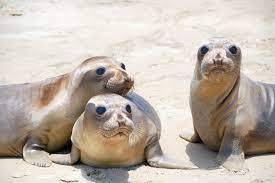
It long seemed as if African elephants were the champions of the all-nighter. They can get by on about two hours of sleep. Other mammals need much more, like koalas (20 hours) or you (at least seven plus at least one strong cup of coffee).
[Expressions]
▶all-nighter = 밤샘 공부, 밤샘 작업
※pull an all-nighter: 밤샘 공부[작업]를 하다, 밤을 새우다
▶get by (on/in/with something) = (~으로) 그럭저럭 살아 [해] 나가다
But the largest living mammals on land have some competition at sea. Northern elephant seals are also able to sustain themselves on about two hours’ sleep, according to a study published Thursday in the journal Science. The study found that Northern elephant seals sleep far less at sea than they do on land, and the z’s they do catch at sea are caught hundreds of feet below the ocean’s surface. The study’s authors believe that sleeping in the deep allows the seals to power-nap without being eaten by prowling predators.
[Expressions]
▶competition = 경쟁자, 경쟁 상대
- have some competition at sea: 적게 자는 데 있어 아프리카 코끼리의 적수가 바다에도 있다
▶catch/grab some z's = 잠을 자다
- the z’s they do catch at sea are caught hundreds of feet below the ocean’s surface: 북방코끼리물범이 바다에서 자는 잠은 해수면 아래 몇 백 미터 깊이에서 포착된다.
▶power-nap = (명)(활력을 보충해 주는) 짧은 낮잠, (동) 그런 낮잠을 자다
▶prowling predators: 돌아다니는 포식자들
▶prowl (prowling), (특히 먹이를 찾아 살금살금) 돌아다니다
The tiger prowled through the undergrowth.
“They dive down, stop swimming and begin to glide,” Kendall-Bar said.
As they go deeper, their brain activity starts to slow.
“Then they transition to REM sleep, where they flip upside down and spin in a circle, falling like a leaf,” she said.
While in rapid eye movement, or REM, sleep, which is the deepest stage of sleep, the seals stayed upside down, oblivious to their slow descent.
[Expressions]
▶oblivious to ~ = ~를 감지하지 [의식하지] 못하는
▶oblivion [əˈblɪviən]
1. 의식[자각] 하지 못하는 상태
He often drinks himself into oblivion.
그는 자주 인사불성이 될 때까지 술을 마신다.
2.(명성·중요성 등을 잃고) 잊힘, 망각 (=obscurity)
An unexpected victory saved him from political oblivion.
예상밖의 승리가 그를 정치적으로 잊히는 것에서 구제해 주었다.
3.(정말 파괴되어) 흔적도 없이 사라짐
Hundreds of homes were bombed into oblivion during the first weeks of the war.
전쟁이 일어난 첫 몇 주 동안에 수백 채의 가옥들이 폭격을 맞아 흔적도 없이 사라졌다.
After sleeping for around 10 minutes, the seals would suddenly wake up and make their way back to the surface. During these sleep dives, some seals sank more than 1,000 feet, sometimes finding themselves on the seafloor.
The seals Kendall-Bar and her colleagues monitored took several sleep dives each day, providing them with around two hours of sleep in total. When Northern elephant seals haul out on land to breed and molt, they sleep for more than 10 hours a day. During that time, the seals aren’t eating, which may explain their need for extra sleep.
[Expressions]
make one’s way back to ~: ~로 되돌아가다
▶seafloor = 해저 (=seabed)
▶molt (혹은 moult) = (명) 털갈이, (동) 털갈이를 하다
- haul out on land to breed and molt: 번식과 털갈이를 위해 뭍으로 (힘겹게) 올라오다
“Sleep is an adaptive trait,” said Jerome Siegel, a professor of psychiatry at the University of California, Los Angeles, who studies the evolution and function of sleep. “Animals have evolved to sleep in certain situations and not in others.” It makes perfect sense, Siegel said, that elephant seals would limit the amount of time they spend sleeping while at sea to make the most of their food intake and reduce the amount of time they are vulnerable to predators.
[Expressions]
▶make the most of ~ = ~를 최대한 이용[활용]하다
“Northern elephant seals exhibit unparalleled flexibility in their sleep duration,” Kendall-Bar said. “No other mammal goes from sleeping about two hours a day for over 200 days to sleeping 10.8 hours a day.”
Kendall-Bar hopes her team’s findings will aid in the protection of marine mammals.
“Learning more about where, when and how marine mammals sleep at sea can help scientists improve the management of their critical resting habitats,” she said.
[Expressions]
▶That doesn’t make seal sleep habits any less impressive = 그렇다고 해서 물범의 수면 패턴이 조금이라도 덜 놀라워지는 것은 아니다 → 그렇다 해도 물범의 수면 패턴은 여전히 놀랍다
▶unparalleled = 비할 바 없는, 유례없는
추가로 이 동영상을 찾아보니, 정말 신기하네요.
1년 동안 거의 200일을 2시간만 낙엽처럼 해류에 몸을 맡긴 채 잠을 자는 북방 물범 코끼리 이야기.
기사의 마지막 과학자의 말이 더 와닿습니다.
“Learning more about where, when and how marine mammals sleep at sea can help scientists improve the management of their critical resting habitats”
'Morning Special' 카테고리의 다른 글
| EBS Morning Special 4월 30일 일요일: Alice in Wonderland - A Very Strange Tea Party (0) | 2023.07.24 |
|---|---|
| EBS Morning Special 5월 1일 월요일: "노동절인데 나 일하는 중이야?" 를 영어로 (0) | 2023.07.23 |
| EBS Morning Special 4월 28일 금요일: Queen, Freddie Mercury (0) | 2023.07.21 |
| EBS Morning Special 4월 27일 목요일: Prince Harry, Duke of Sussex (0) | 2023.07.20 |
| EBS Morning Special 4월 26일 수요일: F1, Michael Schumacher (0) | 2023.07.19 |


