1. NEWS COVERAGE FROM THE NEW YORK TIMES
This Elephant Taught Herself to Peel Bananas
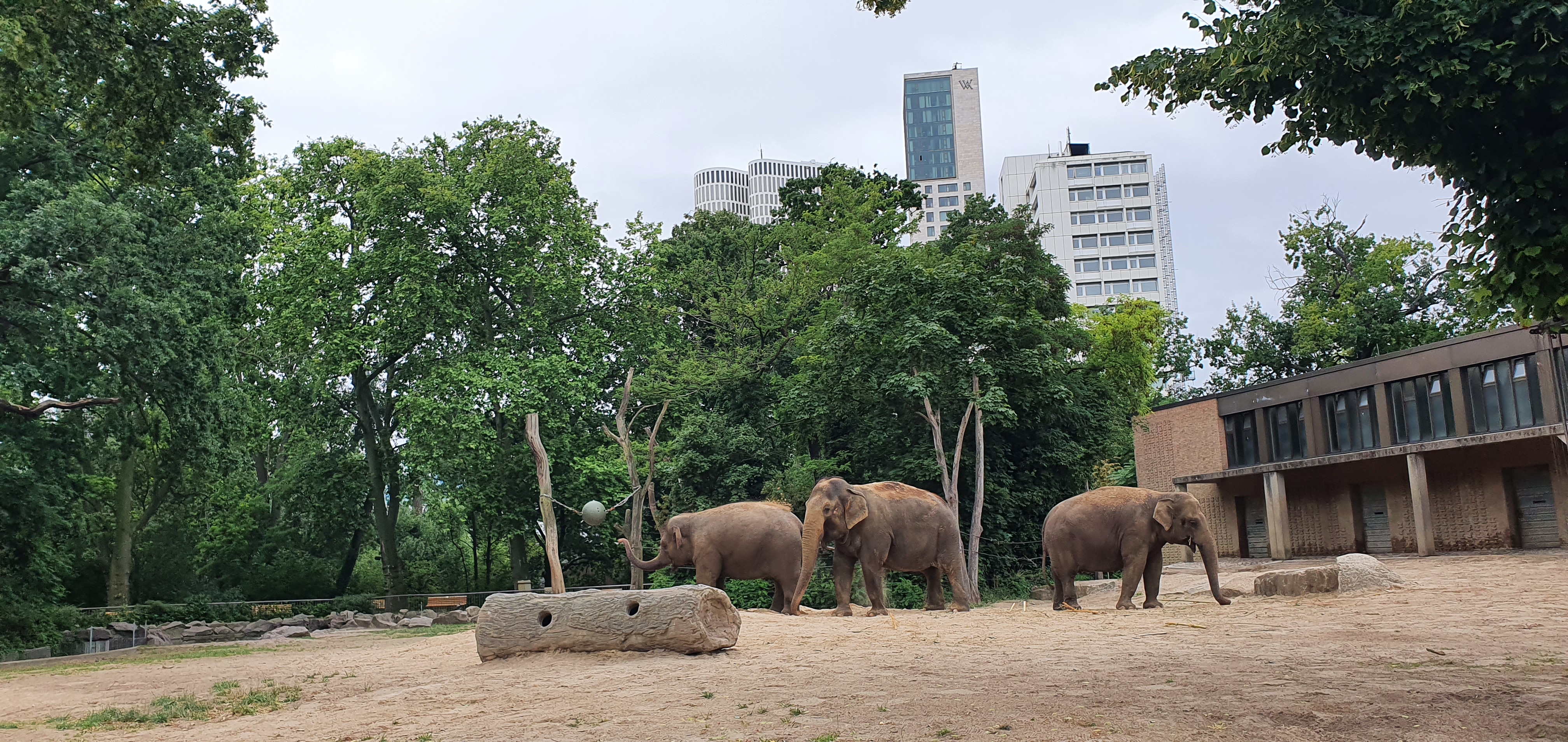
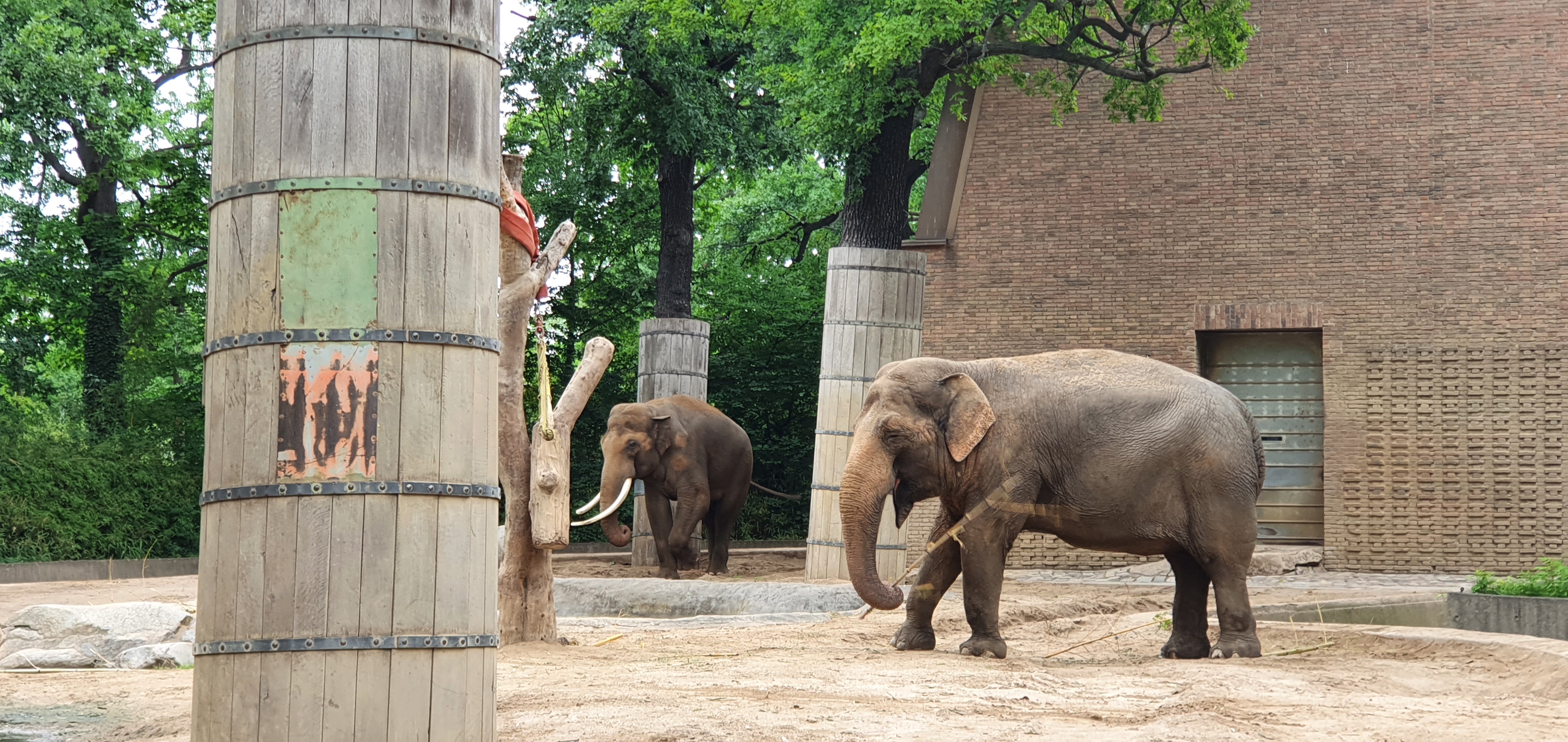
Pang Pha is an elephant of discriminating taste. Offer her a yellow or green banana and she will hoover it up whole, peel and all. Proffer a brown banana, and she is likely to turn her long nose up at it, casually tossing it aside.
But give this Asian elephant, who lives at the Berlin Zoo, a yellow banana speckled with brown, and she might do what none of her pachyderm companions do: peel it. She will snap the banana in half with the tip of her trunk and then shake the fruit until the fleshy interior slides out. Then she’ll devour the pulp, leaving the peel behind.
“It’s quite skillful,” said Michael Brecht, a neuroscientist at Humboldt University of Berlin and one of the authors of a new paper on Pang Pha’s ability to peel that was published Monday in the journal Current Biology. “She clearly optimized the behavior.”
Brecht and his colleagues suspect that Pang Pha, who was raised at the zoo, developed her method after watching her caretakers peel the fruit for her.
The behavior is not unprecedented — there are anecdotal reports and online videos of other elephants peeling their fruit — and several outside experts said they were not convinced that Pang Pha had learned the habit from humans. But her behavior is interesting, scientists said, and highlights how skilled elephants are at manipulating objects.
“Banana peeling is another example of how dexterous the elephant’s trunk is,” Joshua Plotnik, a comparative psychologist at Hunter College in New York City, said in an email. “It’s a wonderful ‘built in’ tool that the elephant uses for a variety of purposes.” The study got off to a slow start. After zookeepers told Brecht, who studies elephant behavior and neurobiology, about Pang Pha, researchers spent weeks plying her with bananas. But they never saw the signature peeling behavior her keepers had promised. “We would bring always the nicest banana we could find for her, and she would just never peel it,” Brecht said.
Eventually, the researchers realized that she would peel only bananas that were at the right level of ripeness, seeming to prefer the yellow-brown ones in particular. That is probably because those very ripe bananas are easier to slide out of their peels, Brecht said, although there are other potential explanations, too. “The other thing that we thought of is that the brown peel might taste disgusting,” he said.
[Expression]
▶discriminating taste : 뛰어난 감각 (맛을 구별해 내는 능력)
▶hoover (something) up : ~을 빨아들이다. 흡입하다. hoover 진공청소기로 청소하다.
▶proffer : 내밀다, 권하다. offer
▶speckled with ~: ~으로 얼룩덜룩 한 (=flecked with)
▶pachyderm : 후피 동물(코끼리처럼 가죽이 두꺼운 동물)
▶devour : 허겁지겁 먹다. (=gobble up)
▶not unprecedented : 선례가 없는 것은 아니다.
▶anecdotal : 확증되지 않는 사례가 있는, 일화가 있는
▶be convinced : (수동) 확신하다. cf. convinve 설득하다
▶dexterous : 솜씨 좋은, 손재주가 비상한 ambidexter: 양손잡이
▶get off to : ~으로 시작하다. (=begin with)
▶neurobiology : 신경 생물학
▶ply (somebody) with something : ~을 ~에게 자꾸 주다.
▶at the right level of ripeness : 딱 알맞게 익은 (숙성된)
2. TALES & FABLES
①The Light Princess
The Light Princess
Life has its ups and downs. We all go through times of trouble and moments of joy, and it seems like the way we react to both can say a lot about us as people. Some laugh in the face of danger, others weep with happiness, but what might happen if we were cursed to never take things seriously? Would we be happy? Could we be happy? My tale today deals with just such a thing. There was once a king and queen who wished most sorely for a child and after many years they were blessed with a daughter and were the happiest parents in the entire kingdom. They threw the biggest christening the country had ever seen and the king even wrote all the invitations by hand, but in his haste he forgot one important guest - his own sister. Yes, Princess Makemnoit, was most displeased by this omission. Her wicked behavior had already seen their parents turn their backs on her, but her brother was much kinder and held no ill will towards her, he was just forgetful. But the sister decided that she must have her vengeance and put a curse on the baby at the christening. Hence forth she would be light of spirit, light of body and the only thing she would crush would be her parents’ hearts. And the curse came true.
The baby was suddenly deprived of gravity. She floated out of her mother’s arms and it took three servants and a stepladder to get her down from the church ceiling. And from that day on, she had to be weighed down in case she floated away. There were several incidents in her childhood where her lack of gravity caused some issues. She once was caught by the wind and transported out her bedroom window, only to be found sleeping under a rose bush and would have to carry stones in her hands if she so much as wished to walk upon the ground. She also lacked gravity in her demeanor. She could take nothing seriously and no matter what grave news and no matter how upset or angry the king and queen might be, the young princess would only laugh at the situation - though she never smiled. The royal parents, as the years went by, sought solutions of all sorts to the girl’s lack of gravity. Some pondered if she could be made to cry, then the curse might be broken. But she never shed a tear. Water in the form of ice though, did have a strange effect. Whenever her feet touched ice on a frozen lake or river or stream, she would stay on the ground like a normal human and not rise up into the air. And so the princess spent most of her waking hours ice skating on the palace lake. The king made sure that all year round the lake remained frozen with imported ice from far off lands. And like a happy ballerina, the young princess would gracefully skate across the ice rink and didn’t have to worry about rising up into the heavens and frantically trying to ground herself.
One day a prince from a neighboring nation rode by the royal ice rink. Being an amateur ice skater himself, the prince was captivated by her graceful moves and he joined her on the ice. They skate together for many happy hours. Princess Makemnoit, the evil aunt, got wind of the effect of ice and how happy the young princess was, and vowed to put a stop to all this jollity. she made her servants litter the ice rink with sharp stones and rocks to stop the young princess from skating. Unfortunately, the prince unaware of her evil plan, put on his skates and set out to warm up before the princess floated to join him on the ice rink. He slipped and tripped on the stones and rocks and severely injured himself. He was rushed to hospital and the whole royal family feared for his life. Especially the young princess, who for the very first time in her life did not laugh at the serious situation.
In fact, not only did she not laugh, but she started to weep. Tears fell from her eyes and rolled down her cheeks for the very first time in her life. The weeps turned to sobs, the sobs turned to cries and the cries turned to wails. In fact, she was so upset that the king and the queen and everyone around her started to cry. So moved they were by her emotion. And as one they decided they would help to make things better. As the princess stayed with the prince, every other member of the royal court walked to the ice rink and as one picked up every single stone and rock. The rink was cleared in minutes. Meanwhile the prince was treated by the palace’s best doctors and made a swift recovery. When he opened his eyes and saw the young princess she stopped crying immediately and for the first time in her life she smiled a real smile. And she also found herself not floating above the ground. As for Princess Makemnoit she was arrested by the palace guards for malicious littering and spent the next few years picking up trash from the side of the road as her punishment. The prince recovered fully and he and the young princess spent every day together. For she needed his help. She had discovered her gravity and so now had to learn how to carry her weight and walk on land like all the other folks, rather than float through life. It was hard going, but with his help and love and patience, she mastered one step after another and entered adulthood with seriousness and passion and dedication. In fact the two were so dedicated to each other they married and lived for many happy years together. And as they lived their lives for better and worse, they laughed in the good times and they felt as if they were floating on air, but whenever matters took a turn for the worse, they always had their feet firmly on the ground.
- sorely : 몹시, 심하게 I have a sore throat. 목이 아파요. (척추로 인한 목의 통증 같은 것은 neck으로 표현.)
- omission : 생략; 빠짐, 누락
- vengeance : 복수, 앙갚음 (=revenge)
- christening : 세례 (=baptism)
- demeanor : 처신, 태도 (→manner)
- get wind of : 소식을 들다 (get wind: 방귀를 뀌다.)
- jollity : 즐거움
- malicious : 악의적인
- feet firmly on the ground : 두발이 확실하게 땅을 짚다, 확실한 기반을 잡은
②The Travelers & the Purse
The Travelers & the Purse
Some friends are fair-weather and some friends will stick with you till the very end, and it’s important to know the difference between them. For if you find yourself between a rock and a hard place, you’ll be looking for that friendly arm to pull you out and if it’s not there and no-one cares then you could well be in big trouble. So, here’s a tale to help you tell the fair-weather friend from the forever friend.
Two friends were traveling. They had met along the road a few weeks back, got on like a house on fire and decided it would be most agreeable for the two of them to become buddies and journey on together. After all, they were both headed for the same destination. And for three or four weeks they had had a whale of a time. They’d walk for miles during the day, then set up camp at night. One might hunt for food, whilst the other built the fire. And then as they cooked dinner they would share stories of their pasts, the adventures they had been on and the dreams they had for the future.
And so all was well and good until one morning, as they strode down the road, they came upon a purse. The first friend picked it up and judging by its weight thought it to be filled with gold. And when he opened it up, indeed it was packed with glinting golden coins - enough to buy a house.
He said, quite proudly: “Ha ha! My fortune is made, for I have found this purse.” “Hang on,” said the second friend, “Shouldn’t that be our and we, not my and I? For I am here with you and surely this kind of luck is shared when we travel together?” “Nonsense,” scoffed the first, “Finders keepers, losers weepers. It’s mine, all mine. Go find your own purse!”
But just as he spoke so rudely, they heard cries in the distance. A group of angry villagers were charging towards them with pitchforks and spades and sickles and clubs, all shouting: “STOP, THIEF!” The first friend panicked, “We’re done for,” he cried, “They’ll lock us up if they see we’ve got this purse.” “Lock us up?” Snorted the second friend, “You chose I over we. This is your business to handle. As for me, I think I’ll carry on down the road. Enjoy your gold for as long as you can keep it.” And with that the second friend walked away as the first dropped the purse to the ground, held his hands in the air, fell to his knees and did his best to explain that he had just found it lying there. Fortunately, the villagers, gladdened by the retrieval of their collected funds, chose to believe the first friend and he was sent on his way. Needless to say, the two did not walk together for the rest of their journey.
- fair-weather : 자기 좋을 대로만 [형편이 좋을 때만] 하는
- stick with you : 끝까지 너와 함께
- most agreeable : 대단히 유쾌하다, 기분 좋은, 쾌활한
- have a whale of a time : 굉장히 즐거워하다 [고래만큼 큰 즐거운 시간을 보내다]
- scoff : 비웃다, 조롱하다
- “finders keepers, losers weepers” : 주운 사람이 임자다
- pitchforks and spades : 쇠스랑, 삽
- sickles and clubs : 낫, 곤봉
- snort : 코웃음을 웃다 [치다], 콧방귀를 뀌다


